Programmatic SEO Content Automation: Scale to 100K Visitors

You’re staring at a spreadsheet. Fifty keywords. Each one needs a page. Each page needs to be unique, optimized, and actually convert. You do the math: at 4 hours per article, that’s 200 hours of work. Even with a team, you’re looking at weeks of effort—and the moment you finish, Google’s algorithm shifts, and half your keywords become irrelevant.
This is the problem that programmatic SEO content automation solves. Not with magic, but with a system.
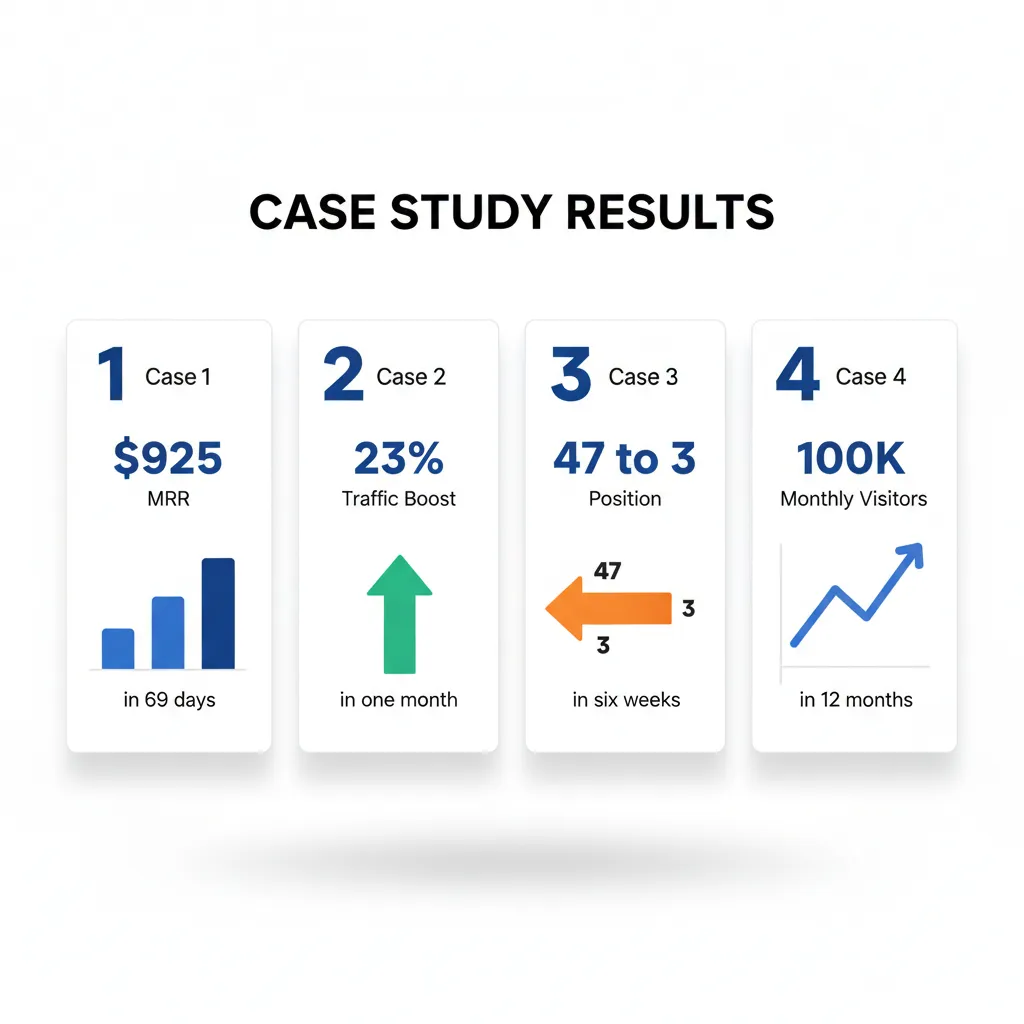
In the last 90 days, I’ve watched real teams do this. One launched a new domain 69 days ago and hit $925 monthly recurring revenue from organic search alone. Another took a 47-page blog from orphaned chaos to a 23% traffic boost in one month. A third went from position 47 to position 3 for a 90K monthly search volume keyword in six weeks—without a single backlink.
What they have in common isn’t a magic tool. It’s a repeatable system for automating the right parts of content creation while keeping the parts that actually matter: human intent, real data, and conversion logic.
Key Takeaways
- Programmatic SEO content automation scales content production by automating brief creation, structure mapping, and on-page optimization—but it requires manual discovery of user pain points first.
- Real results: teams are generating 100K+ monthly visitors, ranking for 62K+ keywords, and converting organic traffic into $13,800+ annual recurring revenue within 12 months.
- The highest-converting content targets high-intent keywords (alternatives, fixes, problem-solving) rather than generic listicles or broad guides.
- Internal linking and conversion optimization matter far more than backlinks when you’re scaling programmatically.
- AI tools accelerate brief creation and structural optimization, but the core strategy—listening to users, identifying gaps, writing authentically—cannot be automated.
What Programmatic SEO Content Automation Actually Is (And What It Isn’t)
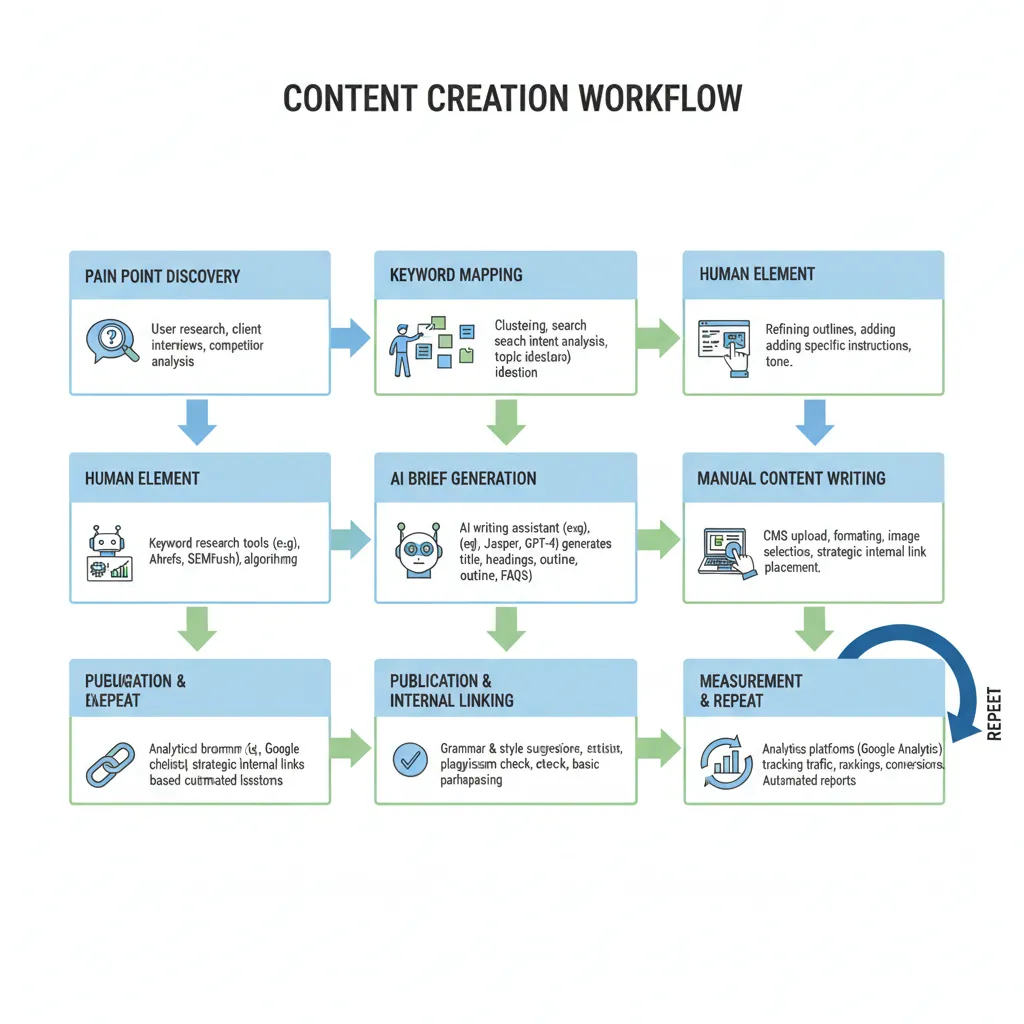
Let’s clear up the confusion first. Programmatic SEO content automation doesn’t mean feeding a prompt to ChatGPT and publishing 100 generic articles. That’s not a strategy—that’s spam with a different wrapper.
What actually works is a system where you:
- Identify real user pain points (from Discord, Reddit, customer feedback, competitor reviews).
- Map those pain points to search queries that already have demand.
- Use AI to generate optimized content briefs, structure, and on-page elements at scale.
- Write the core content manually or have a human refine it.
- Publish with proper internal linking and conversion-focused CTAs.
- Let the system repeat for the next set of pain points.
The automation happens at step 3—where a prompt or tool generates SEO briefs, heading structures, keyword placements, and schema recommendations in minutes instead of hours. But the thinking—the actual strategy—that’s still human work.
One practitioner shared a Claude prompt that replaced his $800/month Ahrefs subscription. The prompt walks through eight phases: SERP analysis, search intent deep-dive, content structure, keyword optimization, differentiation strategy, on-page SEO checklist, content requirements, and success metrics. He used it to create 47 content briefs. Eighty-three percent of the resulting articles ranked in the top 10 within 90 days. Cost: zero. Time per brief: three minutes.
But here’s what he didn’t automate: understanding why his keyword matters. Which competitor he’s trying to outrank. What his audience actually cares about. That thinking went into the prompt itself.
The Real Numbers: What Teams Are Actually Achieving
Abstractions don’t convert readers. Numbers do.
Case 1: New Domain, $925 Monthly Revenue in 69 Days
A founder launched a new SaaS with zero domain authority. No backlinks. No brand recognition. Within 69 days of launch, SEO generated:
- 21,329 website visitors
- 2,777 search clicks
- $925 monthly recurring revenue
- 62 paying customers
- $13,800 annualized from organic search
How? He didn’t chase “best no-code app builders” or “ultimate guides.” Those are competitive wastelands. Instead, he targeted high-intent keywords that showed user pain:
- “X alternative”
- “X not working”
- “X wasted credits”
- “How to do X in Y for free”
- “How to remove X from Y”
These aren’t broad keywords. They’re search queries from people actively looking to switch or solve a specific problem. The content he wrote wasn’t generic—it addressed the exact pain point and offered a solution. At the end of each article, a straightforward CTA: try the tool that solves this problem.
The methodology: listen to users, find the gaps competitors aren’t addressing, write like you’re explaining to a friend, then expand with AI for formatting and structure. No hired writers. No guest posts. Just authentic content written after actually talking to the audience.
Case 2: 47-Page Blog, 23% Traffic Boost in One Month
A client had 47 blog posts. No internal links. No schema markup. Meta descriptions from 2019. Fixing it manually would cost thousands and take weeks.
Instead, one practitioner used Claude Code with a single instruction: crawl the site, audit every page, fix what you can, flag what needs human input. He made coffee while it ran.
When he returned:
- All 47 pages audited
- 39 pages had structured data added
- 31 meta descriptions rewritten
- Internal linking map created
- 3 orphaned pages with high-value keywords identified (the client didn’t even know these existed)
- 8 pages flagged for manual review
Result: 23% organic traffic increase within one month. No SEO tool subscription. No developer hire. No freelancer invoice. One prompt while waiting for coffee.
Case 3: Position 47 to Position 3 in Six Weeks
A creator was ranking at position 47 for “AI productivity tools” (90K monthly searches). Using a detailed Claude prompt for content briefs, he created content targeting that keyword with a focus on differentiation—what makes this better than the current top 10, not just copying what’s already ranking.
Six weeks later: position 3.
Across 47 content pieces created with this system: 39 ranked in the top 10 within 90 days. That’s an 83% success rate. The previous approach: trial and error, hoping something sticks. This approach: define success metrics before writing, structure content to beat specific competitors, measure results.
Case 4: 100K Monthly Visitors and 62K Keywords in One Year
A team took organic traffic from 9,000 monthly visitors to over 100,000 in 12 months. They now rank for 62,000+ relevant keywords and generate 10 times the number of sales-qualified leads. The method: systematic keyword research, user-intent-first content strategy, and programmatic optimization of on-page elements across the entire site.
That’s not a one-off win. That’s a machine.
The Three Parts of Programmatic SEO Content Automation That Actually Scale
Based on what’s working, the automation breaks into three distinct phases:
Phase 1: Pain Point Discovery (Manual, But Scalable)
You don’t start with keywords. You start with complaints.
Join the Discord servers, subreddits, and indie hacker communities where your audience lives. Read competitor roadmaps. Look at what people are frustrated about. One founder discovered that users couldn’t export code from a competitor tool—so he wrote an article about it and added a CTA to his alternative. That single article became a lead generator because it addressed a real, specific pain.
This phase can’t be fully automated. But it can be systematized. Assign someone to spend 2-3 hours per week reading user feedback, competitor complaints, and customer support chats. Extract the top 10 pain points. That list becomes your content roadmap for the next month.
Phase 2: Brief and Structure Generation (AI-Powered, Repeatable)
Once you know what to write about, AI can generate the blueprint in minutes.
Feed your pain point and target keyword into a detailed prompt (like the eight-phase Claude prompt shared earlier). The output: a complete content brief including:
- SERP analysis (what’s currently ranking and why)
- Search intent breakdown (what does the searcher actually want?)
- Content structure with H2s, H3s, and word counts per section
- Keyword placement strategy
- Content differentiation angle (what makes this better than top 10)
- On-page SEO checklist (meta titles, descriptions, schema, images)
- Success metrics (target ranking position, expected timeline)
This is where the $800/month Ahrefs subscription gets replaced. Not because AI does it better—it’s because AI does it fast enough that the cost-per-brief drops from $200+ (agency rate) to near zero (your time plus compute).
One creator did this for 47 briefs. The investment: maybe 5-10 hours total for setup and refinement. The output: a repeatable system that can generate new briefs every week.
Phase 3: Content Creation and Optimization (Hybrid Human-AI)
Here’s where most automation fails: teams try to fully automate writing.
What actually works is hybrid. Write the core of your article manually—or outline it, then have AI expand it using your voice and language. The key insight from a high-performing team: “Write like you’d explain it to a friend. Short sentences, simple headings, answer fast.”
Then use AI to turn that into multiple formats Google and AI systems love:
- Callout blocks for key points
- Quote blocks for emphasis
- Tables for comparisons
- Custom HTML for highlights
- Images with proper alt text
- Videos or screen recordings
The formula: [problem → solution → CTA]. No overselling. Let curiosity do the work.
One founder’s approach: each article has 1-3 clear CTAs, not 10. He tracks which pages bring paying users. Some posts get 100 visits and 5 signups. Others get 2,000 visits and zero conversions. Volume doesn’t equal revenue. Conversion does.
The Mistakes That Kill Programmatic SEO Content Automation
Not everything that can be automated should be.
Mistake 1: Publishing Generic Listicles
“Top 10 AI Tools.” “Best No-Code App Builders.” These rank nowhere and convert even less. Why? Because they’re impossible to differentiate. Everyone publishes them. Google has already decided who wins (usually established brands). You’re fighting a battle you can’t win.
Instead, target high-intent keywords where the searcher has a specific problem. “X alternative.” “X not working.” “How to fix X.” These convert because the searcher is already motivated.
Mistake 2: Ignoring Internal Linking
You publish 50 pages. Each one stands alone. Google can’t find half of them. They become dead ends.
One founder’s rule: each article links to at least 5 others. Build a web of related guides instead of random standalone posts. This matters 100x more than chasing backlinks when you’re starting out. It helps users explore more content. It helps Google understand your site structure. It increases time on site and reduces bounce rate.
Mistake 3: Automating the Thinking
The worst version of programmatic SEO: feed a keyword to an AI, publish the output, repeat 100 times. That’s not a strategy. That’s spam.
What works requires human input at the beginning: understanding your audience, identifying their real pain points, deciding what makes your content different from what’s already ranking. Once that thinking is done, automation accelerates execution. But the thinking can’t be skipped.
Mistake 4: Chasing Volume Over Conversion
One team got 21,000 monthly visitors and $925 MRR. Another team got 100,000 monthly visitors and… we don’t know their revenue. Guess which one has a sustainable business?
Every article should have a clear conversion goal. For a SaaS, that’s usually: try the product. For a lead generation business, it’s: book a call. For an affiliate, it’s: click the link. But there has to be intent behind the content, not just traffic.
Tools That Actually Fit Into a Programmatic SEO Content Automation System
You don’t need a subscription to everything. In fact, most teams doing this at scale use a minimal stack:
For Brief Generation: Claude or ChatGPT with a detailed prompt (free tier works fine). One creator replaced an $800/month subscription with a $0 prompt. The prompt does the thinking; you do the decision-making.
For SERP Analysis: Perplexity (free) for gap analysis, or ChatGPT with web browsing. You’re looking for what’s missing in current results, not fancy competitive analysis tools.
For Content Expansion: ChatGPT or Claude. Feed your outline, get a draft. Edit for voice and accuracy.
For Site Audits: Claude Code can crawl your site, audit pages, add schema, and flag issues—all from a single prompt.
For Tracking Results: Google Search Console (free) and Google Analytics (free). You don’t need a fancy SEO tool to see what’s ranking and what’s converting.
The teams getting results aren’t using 10 different platforms. They’re using a tight workflow: think → brief → write → publish → measure → repeat.
How to Start Your Own Programmatic SEO Content Automation System This Week
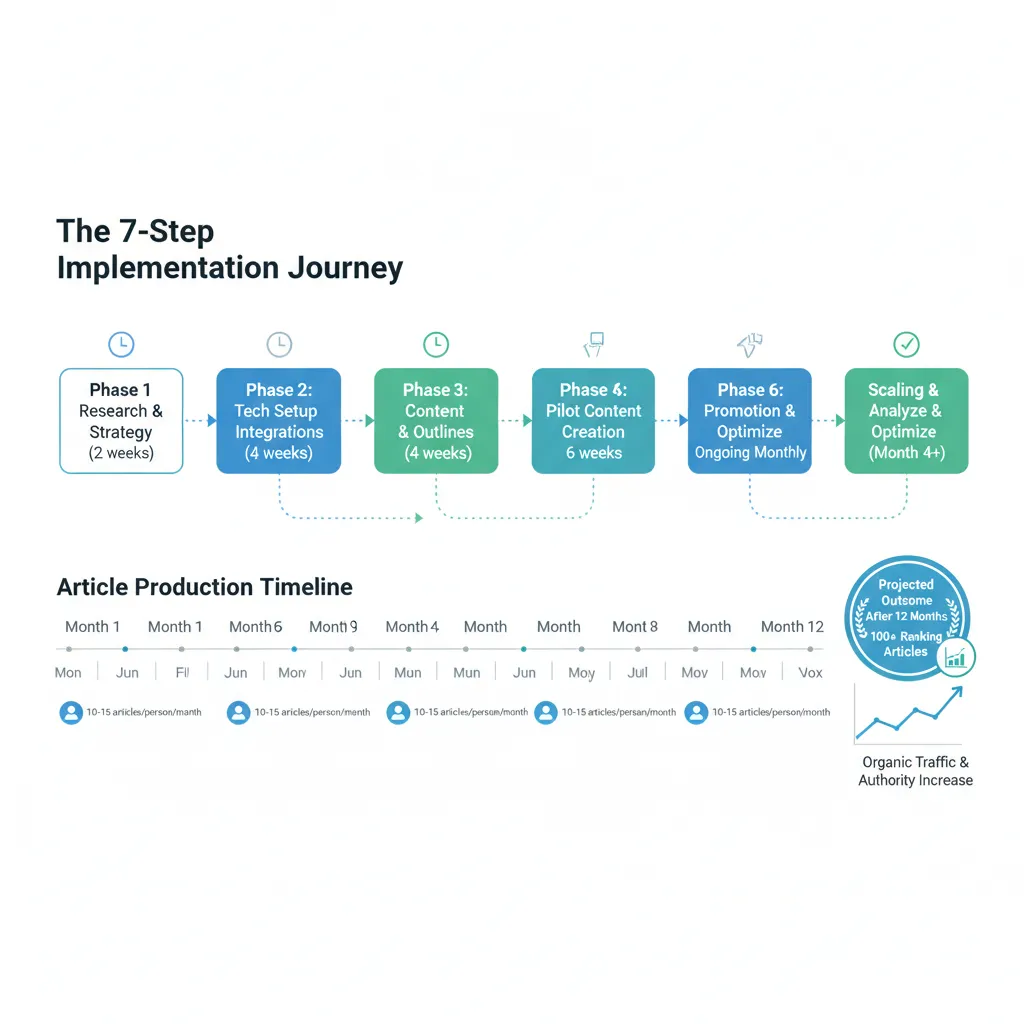
You don’t need permission. You don’t need a big budget. You need a system.
Step 1: Listen (2-3 hours)
Spend time in the communities where your audience hangs out. Read customer support chats. Check competitor reviews. Write down the top 10 complaints or pain points you see. This is your content roadmap.
Step 2: Map to Keywords (1-2 hours)
For each pain point, identify the search query someone would use to find a solution. “X not working” → search volume. “X alternative” → search volume. Use Google Trends or Perplexity to validate demand. You’re not looking for 100K monthly searches. You’re looking for real intent.
Step 3: Create Your Brief Prompt (1 hour, one-time)
Build a detailed prompt that walks through SERP analysis, intent, structure, keyword optimization, differentiation, and success metrics. Test it on one keyword. Refine based on output. Once it works, you can reuse it for every new piece.
Step 4: Generate Briefs (5-10 minutes per brief)
For each pain point + keyword combo, run your prompt. Read the output. Make one or two edits if needed. Now you have a blueprint.
Step 5: Write the Core (30-60 minutes per article)
Don’t let AI write for you. Write the core yourself. Explain the problem. Offer the solution. Keep it conversational. Then use AI to expand, format, and optimize.
Step 6: Optimize and Link (20-30 minutes per article)
Add internal links to at least 5 other articles. Write a clear CTA. Add images with alt text. Check on-page elements against your brief. Publish.
Step 7: Measure (ongoing)
Track which articles drive traffic. More importantly, track which drive conversions. Some pages will surprise you. Double down on what works. Kill what doesn’t.
This entire system, for one article, takes 2-3 hours. For a team of two, that’s 10-15 articles per month. In 12 months, that’s 120-180 pieces. At an 83% top-10 ranking rate, you’re looking at 100+ pieces driving organic traffic.
Why This Works When Other Content Strategies Don’t
Most content strategies fail because they’re either too slow or too automated.
Too slow: hire writers, spend weeks on each piece, publish once a month. Your competitors publish four times that.
Too automated: feed keywords to AI, publish 100 generic articles, hope some rank. They don’t. Google filters out the noise.
Programmatic SEO content automation sits in the middle. It’s fast enough to scale (10-15 articles per month per person). It’s thoughtful enough to convert (targeting high-intent keywords, addressing real pain points, offering solutions). It’s measurable (you know exactly which pieces drive revenue).
One team went from $0 to $925 MRR in 69 days. Another went from 9K to 100K monthly visitors in one year. A third ranked position 3 for a 90K monthly search volume keyword in six weeks. These aren’t anomalies. They’re outcomes of a system.
The Real Bottleneck (Spoiler: It’s Not Tools)
Most teams think the bottleneck is tools. It’s not.
The bottleneck is consistency. Publishing one great article is easy. Publishing one great article every week for a year is hard. Most teams quit after a month when they don’t see results.
The second bottleneck is listening. Understanding your audience deeply enough to know what they actually need. This can’t be rushed. It requires time in communities, reading feedback, talking to customers. But once you have this, everything else is faster.
The third bottleneck is conversion thinking. Not every article needs to convert. But every article should have a purpose. Some are awareness. Some are consideration. Some are decision. If you don’t know which is which, you’ll waste effort on pages that drive traffic but no revenue.
Tools can help with all three. But they can’t replace the thinking.
Scaling Programmatic SEO Content Automation Across Teams
One founder built an SEO agency using this exact system. He niched down hard: SaaS companies spending $5K+ on content that isn’t ranking. He reverse-engineered what works from successful clients. He built a content engine posting 7 times per week showing how LLM-powered SEO works, real ranking improvements, and common mistakes.
Result: 145 calls booked in 90 days. Multiple $5K-$10K/month deals. $500K+ pipeline.
How did he scale? By documenting the system. Every step of the process became repeatable. Sourcing pain points. Creating briefs. Writing content. Measuring results. Once it’s documented, you can teach it to a team member. Once a team member can do it, you can do it 10 times over.
The key: don’t hire writers. Hire people who understand the audience. Teach them the system. Let them execute.
FAQ: Programmatic SEO Content Automation
Q: Does this work for competitive keywords?
A: Not at first. Start with high-intent, lower-volume keywords where the searcher has a specific problem. Once you have authority (from ranking for 50+ keywords), you can start targeting broader, more competitive terms. One founder went from position 47 to position 3 for a 90K monthly search volume keyword, but only after establishing topical authority with dozens of supporting pieces.
Q: How long until I see results?
A: 30-90 days for initial rankings. 6-12 months to see meaningful traffic and revenue impact. Most teams quit at month 2 when they don’t see results. Don’t be that team.
Q: Do I need backlinks?
A: Not for starting out. One founder generated $925 MRR with zero backlinks. Another went from position 47 to position 3 without a single link. Focus on internal linking, content quality, and user experience first. Backlinks matter later, when you’re competing for ultra-competitive terms.
Q: Can I use AI to write the entire article?
A: You can, but it won’t convert as well. The best articles have a human voice. Write the core yourself (or outline it), then use AI to expand and format. The difference in conversion rate is usually 2-3x.
Q: What’s the difference between this and traditional SEO?
A: Traditional SEO focuses on backlinks, domain authority, and broad keyword research. Programmatic SEO focuses on user intent, pain points, and conversion. Traditional SEO asks: “What keywords should I rank for?” Programmatic SEO asks: “What problems does my audience have, and what keywords do they search to solve them?” It’s a subtle difference, but it changes everything.
Q: Do I need to hire an agency?
A: No. Most of what agencies charge $5K-$10K per month for (content briefs, structure, on-page optimization) can now be done with AI prompts. What you can’t outsource: understanding your audience, writing authentically, and measuring results. Do those yourself. Automate the rest.
The Next Step: Building Your System Today
Programmatic SEO content automation isn’t new. What’s new is that the tools to do it are now accessible to anyone with a laptop and internet connection.
You don’t need a $5K/month agency. You don’t need a team of writers. You don’t need an SEO tool subscription. You need a system and consistency.
The teams winning right now are the ones who:
- Listen to their audience obsessively
- Target high-intent keywords where the searcher is ready to convert
- Use AI to accelerate brief creation and optimization
- Write authentically, like they’re explaining to a friend
- Measure conversion, not just traffic
- Repeat weekly for 12 months
That’s it. No magic. Just a system.
If you’re publishing content manually, one article at a time, you’re leaving money on the table. If you’re publishing with AI but no strategy, you’re wasting time. The middle ground—programmatic SEO content automation with human thinking—is where the results are.
Start this week. Pick one pain point your audience has. Find the keyword they’d search. Create a brief. Write the article. Publish it. Measure it. Repeat.
In 12 months, you’ll have 50+ pieces ranking. In 24 months, you’ll have a machine generating consistent organic revenue.
The only question is: do you have 12 months to wait? Because your competitors probably don’t—and they’re starting today.
If you want to accelerate this process and keep your team aligned on what’s working, teamgrain.com helps teams publish SEO-optimized content consistently across multiple channels while tracking which pieces drive actual conversions. It’s built for exactly this workflow: pain point research, brief generation, content creation, and measurement. But the system works with or without it. The key is starting.