Generative Engine Optimization Strategy Guide
Search is changing faster than most teams realize. Six months ago, the question was whether generative AI would replace Google. Today, it’s clear: AI-powered search engines are already here, reshaping how people find information, and traditional SEO alone won’t cut it anymore. If your generative engine optimization strategy hasn’t evolved, your organic visibility is already slipping.
This isn’t about abandoning SEO. It’s about understanding what’s different, what stays the same, and how to position your content so it appears in both traditional search results and AI-generated answers.
Key Takeaways
- Generative engine optimization is fundamentally different from SEO, but the two coexist rather than replace each other.
- AI engines prioritize authoritative sources, conversational language, and direct answers over keyword density.
- Your generative engine optimization strategy must account for how AI systems synthesize and cite information.
- Content structure, E-E-A-T signals, and topical depth matter more than ever.
- Real visibility in 2025 requires publishing consistently, updating regularly, and monitoring both traditional and AI search channels.
Why Your Current SEO Strategy Isn’t Enough
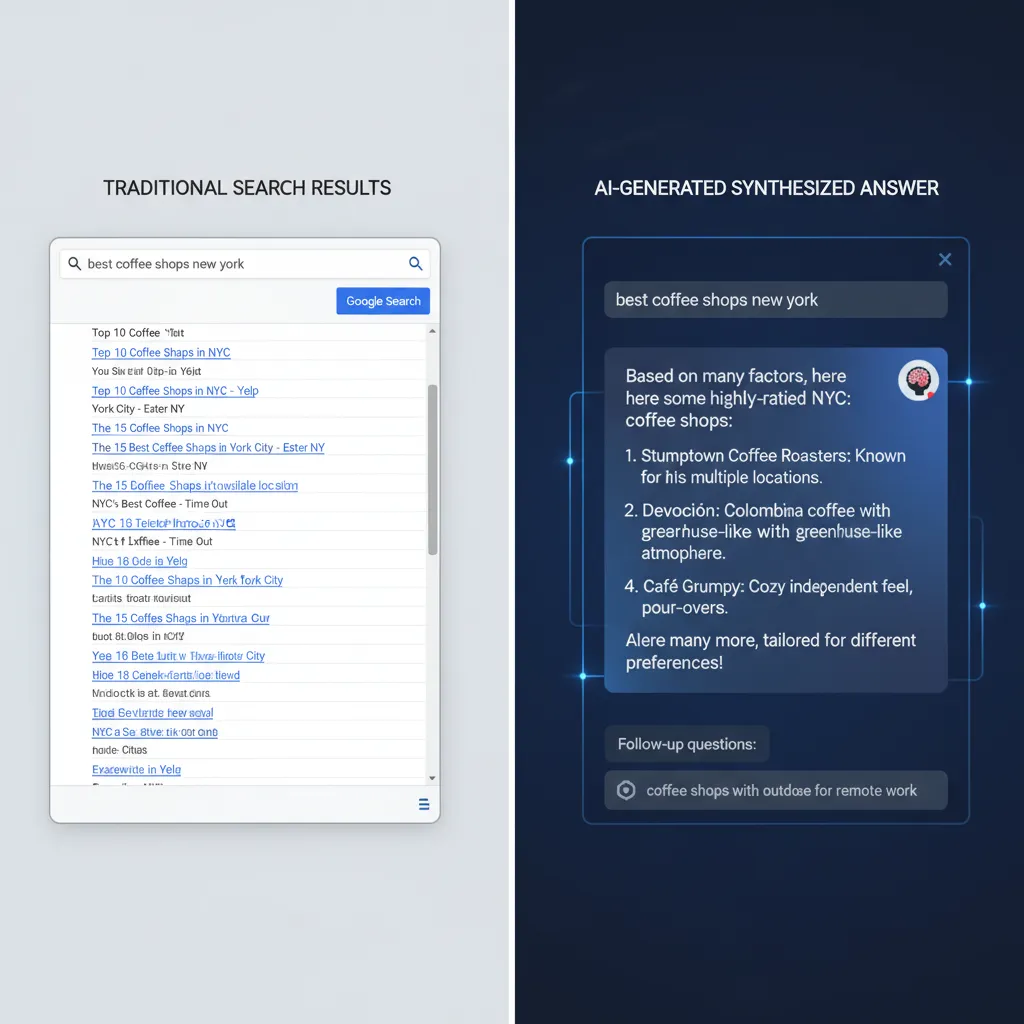
Let’s be honest: most teams are still optimizing for click-through rates on Google’s blue links. That made sense in 2020. It doesn’t anymore.
When you search for “how to structure a content calendar” on ChatGPT, Perplexity, or Google’s AI Overview, you don’t get a list of ten blue links. You get a synthesized answer, often pulling from multiple sources. The engine reads dozens of articles, evaluates their authority and relevance, and delivers a single coherent response to the user.
This changes what you need to optimize for. A generative engine optimization strategy isn’t just about ranking for keywords. It’s about being one of the sources an AI system considers authoritative enough to cite or draw from. And that’s a much higher bar.
Traditional SEO still matters—it gets you traffic from people who click links. But if your content never appears in an AI’s training data or citation pool, you’re invisible to an entire class of searchers who’ve already moved to conversational AI.
The Core Differences: GEO vs. SEO
Before we talk strategy, let’s clarify what’s actually different.
SEO optimizes for ranking algorithms. You structure content around keyword intent, build backlinks to signal authority, and optimize for click-through rate. The goal is page one visibility.
Generative engine optimization optimizes for inclusion and citation. You structure content for comprehensiveness, establish clear expertise and authority, and write for synthesis rather than skimming. The goal is being cited or referenced in AI-generated answers.
Here’s the nuance: these aren’t mutually exclusive. A piece of content can rank well in Google’s traditional results AND appear in AI overviews. But the optimization levers are different.
In SEO, you might optimize a 500-word article with perfect keyword placement and internal links. In GEO, that same article might need to be 2,000+ words with comprehensive coverage, clear source attribution, and direct answers to related questions. AI systems reward depth and authority. They penalize thin content, regardless of keyword density.
Building Your Generative Engine Optimization Strategy: The Framework
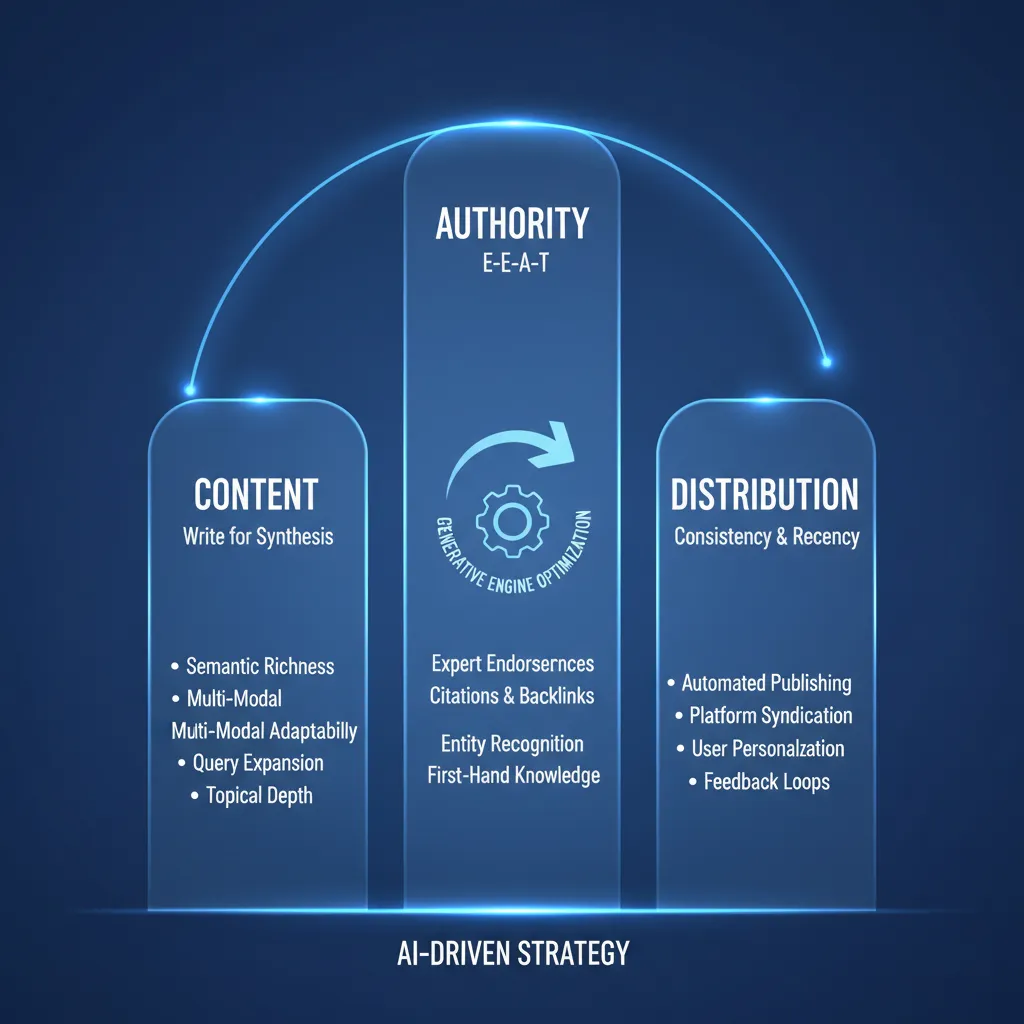
A working generative engine optimization strategy has three layers: content, authority, and distribution.
1. Content: Write for Synthesis, Not Just Search
AI systems don’t read like humans. They don’t skim. They parse entire documents looking for comprehensive coverage of a topic, clear structure, and direct answers.
This means:
- Answer the question in the first 100 words. Don’t bury your main point. AI systems look for immediate, direct answers.
- Cover related subtopics comprehensively. If you’re writing about “content calendars,” also cover planning, tools, team roles, common mistakes, and measurement. Depth signals authority.
- Use clear headings and structure. AI systems parse headings to understand topic hierarchy. Messy structure confuses them.
- Define your terms. If you use industry jargon, explain it. AI systems need to understand context to cite you accurately.
- Include actual data and examples. Generic advice gets ignored. Specific numbers, case studies, and real-world examples are what AI systems cite.
The difference in practice: a traditional SEO article might be “How to Build a Content Calendar in 5 Steps” with 800 words. A GEO-optimized article covers the same topic but also explains why content calendars matter, how they fit into broader strategy, what tools teams actually use, and what mistakes to avoid. It’s 2,000+ words, but it’s the kind of comprehensive piece an AI system treats as authoritative.
2. Authority: E-E-A-T Still Wins
Google’s E-E-A-T framework (Experience, Expertise, Authoritativeness, Trustworthiness) isn’t just for ranking. It’s become the baseline for AI inclusion.
AI systems need to know: Who wrote this? What’s their background? Why should I trust them?
This means:
- Author bios that include credentials, not just a headshot.
- Clear bylines on every article (not “Marketing Team”).
- Regular publication history from the same domain (consistency signals authority).
- Backlinks from other authoritative sources (still matters for AI systems).
- Original research, data, or methodology (AI systems cite sources that bring new information).
Here’s what’s changed: in traditional SEO, you could rank with thin content and good backlinks. In GEO, thin content with backlinks gets you nowhere. An AI system won’t cite a piece just because it has links. It needs to believe the source actually knows what it’s talking about.
3. Distribution: Consistency and Recency Matter
A generative engine optimization strategy that publishes sporadically won’t work. AI systems train on recent data. They also look at publication frequency as a signal of active expertise.
This means:
- Publish consistently (weekly or bi-weekly, not once a quarter).
- Update older articles with new data and examples.
- Repurpose content across multiple formats (blog posts, social, email, LinkedIn).
- Build topical clusters, not isolated articles.
The math is simple: if you publish one article a month, you have 12 touchpoints with AI systems per year. If you publish weekly, you have 52. Consistency compounds.
What Teams Are Actually Doing: Real Approaches
We’ve talked to dozens of teams experimenting with generative engine optimization strategy in 2025. Here’s what’s working:
Approach 1: The Comprehensive Hub
Some teams are building one really deep, authoritative piece per topic—2,500 to 3,500 words, updated monthly with new data. They’re not trying to rank for 50 variations of a keyword. They’re trying to become the definitive source on a topic that AI systems can’t ignore. One B2B SaaS company did this for “content marketing ROI” and now appears in AI overviews for 15+ related queries.
Approach 2: The Topical Cluster
Others are building clusters of related articles, each optimized for GEO, all linking to a central pillar. This works because AI systems see the cluster as a comprehensive knowledge base. One team reported that after restructuring their content into clusters, their AI overview appearances increased by 40% in three months.
Approach 3: The Original Data Play
Several teams are publishing original research—surveys, analyses, benchmarks—that no one else has. AI systems love this because it’s citable. You can’t find this data anywhere else, so when an AI system needs to answer a question, it cites your research. One marketing agency published a “2025 Content Marketing Trends” report and now appears in AI answers for dozens of related queries.
What all three approaches share: they require consistent, high-quality publishing. There’s no shortcut.
The Practical Steps: How to Start Today
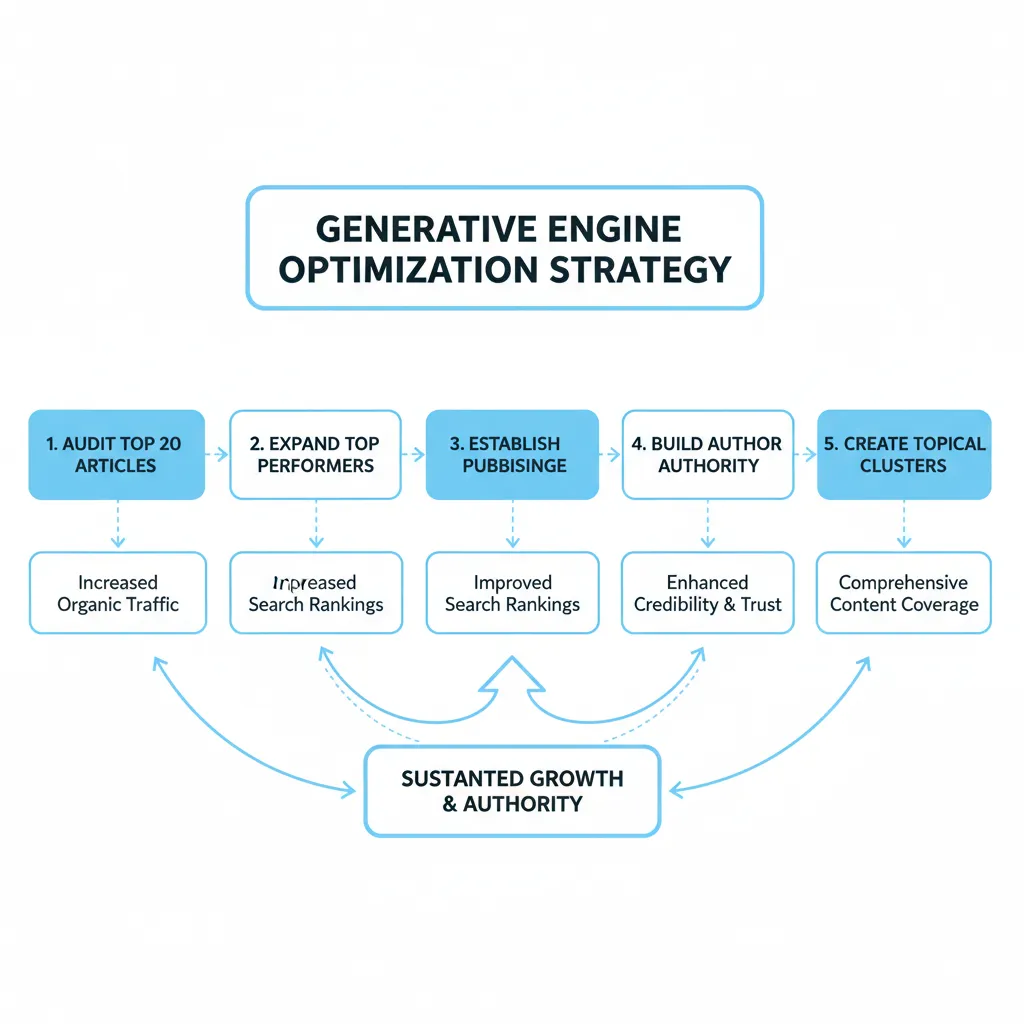
You don’t need to rebuild your entire content strategy. Start small.
Step 1: Audit Your Top 20 Articles
Which of your articles appear in AI overviews? Search them on ChatGPT, Perplexity, and Google’s AI Overview. Note which ones are cited and which aren’t. The ones that appear are your model. The ones that don’t need work.
Step 2: Expand Your Top Performers
Take the articles that already appear in AI answers and make them longer, more comprehensive, and more authoritative. Add original data, examples, and related subtopics. AI systems already trust these pieces. Give them more reason to.
Step 3: Establish a Publishing Cadence
Commit to publishing at least one high-quality article per week. This doesn’t mean quantity over quality. It means consistent, authoritative content that builds topical depth over time.
Step 4: Build Your Author Authority
Put real names and credentials on your articles. Link to author bios. Build a consistent voice. AI systems (and humans) need to know who’s behind the content.
Step 5: Create Topical Clusters
Group related articles together. Link them to a pillar. This helps AI systems understand that you have comprehensive coverage of a topic, not just scattered posts.
The Tools You Actually Need
You don’t need specialized “GEO tools” yet. Most of them are overhyped. What you need is a system for consistent publishing and distribution.
At minimum, you need:
- A way to write and publish content regularly (your CMS or a content management platform).
- A way to track where your content appears (manual searches in AI systems, or a monitoring service).
- A way to distribute content across multiple channels (email, social, LinkedIn) without manual work each time.
- A way to update old content without starting from scratch.
Many teams are using content automation platforms to handle the distribution and update cycle. The idea is simple: write once, publish everywhere, update automatically. This frees you to focus on content quality rather than distribution logistics.
For example, a platform that publishes your weekly article to your blog, then automatically distributes it across 12+ social networks and sends it to your email list, saves 5-10 hours per week. That time goes back into research and writing—the things that actually matter for generative engine optimization strategy.
Common Mistakes to Avoid
Mistake 1: Keyword Stuffing Still Feels Tempting
AI systems are better at detecting keyword stuffing than Google ever was. Write naturally. If a keyword doesn’t fit, don’t force it. Authority and readability matter more.
Mistake 2: Publishing Inconsistently
One article a month won’t build authority. AI systems need to see consistent, ongoing expertise. Commit to a schedule and stick to it.
Mistake 3: Ignoring Your Existing Content
Your best articles from 2023 are getting stale. Update them with new data, examples, and links. This is often easier than writing new content and sends a signal to AI systems that your content is current.
Mistake 4: Treating GEO as Separate from SEO
It’s not. An article that ranks well in Google and appears in AI overviews is the goal. Your strategy should optimize for both simultaneously, not one or the other.
Mistake 5: Not Building Author Authority
Anonymous content doesn’t get cited. Put names on your articles. Build bios. Let people (and AI systems) know who’s behind the expertise.
Measuring What Matters
Traditional metrics—page views, click-through rate—still matter. But for generative engine optimization strategy, you need new measurements.
Track AI Overview Appearances
Search your target keywords in ChatGPT, Perplexity, and Google’s AI Overview. Note which articles are cited. This is your GEO ranking. It changes weekly, so check regularly.
Monitor Citation Frequency
Some platforms track how often your content is cited in AI-generated answers. This is the new “ranking.” If you’re cited 5 times a month and your competitor is cited 20 times, they’re winning GEO.
Measure Organic Traffic from AI
AI systems do send traffic. Look at your analytics for referrals from ChatGPT, Perplexity, and other AI platforms. This is growing fast for many teams.
Track Topical Authority
Are you appearing in AI answers for your core topic AND related topics? This signals topical depth. A generative engine optimization strategy that only appears for your exact keyword isn’t working.
Why Consistency Beats Everything Else
Here’s what we’ve learned: generative engine optimization strategy isn’t about tricks or hacks. It’s about building a reputation as a source of authoritative, comprehensive, current information.
That takes time. But it compounds. A team that publishes one high-quality article every week for six months will have 24 pieces of content. If even half of them appear in AI overviews, that’s 12 citations per week flowing to their domain. A team that publishes sporadically might have 6 articles in the same timeframe.
The difference in visibility isn’t 4x. It’s 10x or more, because consistency signals authority to both algorithms and humans.
The challenge is that most teams can’t sustain this alone. Writing one good article per week, updating old content, managing distribution, and monitoring AI appearances requires systems and processes. Many teams try to do it manually and burn out within a month.
This is where automation helps. Not AI-generated content—that’s a trap. But systems that handle publishing, distribution, and monitoring so your team can focus on research and writing. When you remove the friction from the publishing process, consistency becomes possible.
The Future of Generative Engine Optimization Strategy
AI search is still early. The rules will change. But the fundamentals won’t: authority, comprehensiveness, and currency will always matter.
What’s likely to change:
- AI systems will become more selective about sources, not less. This means authority will matter even more.
- Citation tracking will become standard. You’ll see exactly which of your articles are cited and how often.
- Topic clustering will become more important as AI systems reward comprehensive coverage over scattered posts.
- Author authority will become a ranking factor, not just a trust signal.
Teams that build consistent publishing systems now will have a massive advantage in 12 months. Teams that wait will be playing catch-up.
FAQ: Generative Engine Optimization Strategy
Q: Do I need to choose between SEO and GEO?
A: No. A good generative engine optimization strategy optimizes for both. An article that ranks in Google AND appears in AI overviews is the ideal outcome.
Q: How long does it take to see results?
A: Weeks to months, depending on your starting point. If you’re publishing consistently and have some domain authority, you might see AI appearances within 4-6 weeks. If you’re starting from zero, expect 3-6 months.
Q: Should I write longer articles?
A: Not necessarily longer, but more comprehensive. A 1,500-word article with deep coverage beats a 3,000-word article with fluff. AI systems reward depth and relevance, not word count.
Q: Can I use AI to write my articles?
A: Not for GEO. AI-generated content lacks original insight, real examples, and the kind of authority AI systems look for. You need human expertise. You can use AI for editing and formatting, but not for the core content.
Q: How often should I publish?
A: Weekly is ideal. If that’s not possible, bi-weekly minimum. Anything less than bi-weekly won’t build momentum.
Q: Does generative engine optimization strategy replace traditional SEO?
A: No. It complements it. You need both to maximize visibility in 2025.
Moving Forward: Your Next Step
A generative engine optimization strategy isn’t complex. It’s just consistent, authoritative publishing with clear structure and original insight. The challenge isn’t understanding what to do. It’s actually doing it week after week.
Most teams fail not because they don’t understand GEO, but because they can’t sustain the publishing cadence required to build authority. They start strong, publish three articles, then life gets in the way. Six months later, they’ve published six articles total and wonder why they’re not seeing results.
The teams winning are the ones who’ve built systems to make publishing sustainable. They’ve automated distribution, they’ve streamlined the update process, and they’ve made it easy to publish consistently without burning out their team.
If you’re serious about visibility in AI-powered search, start here: commit to publishing one high-quality article per week for the next three months. Structure your articles for AI (clear answers, comprehensive coverage, topical depth). Track where they appear in AI overviews. Then measure what works and double down.
That’s not a generative engine optimization strategy. That’s a business decision. And it’s the only one that matters.