AI for Social Media Posts: Generate Millions of Impressions
AI for Social Media Posts: How Creators Are Generating Millions of Impressions Without Manual Content Work
A 21-year-old marketer just generated 10 million social impressions in a year using three steps: compile transcripts, fine-tune an AI model, track obsessively. Someone else automated their entire content operation and replaced a $250,000 marketing team. Another creator is pulling in $203,000 monthly from auto-published posts.
These aren’t outliers. They’re what happens when you stop treating AI as a toy and start treating it as infrastructure for social media.
Key Takeaways
- AI-generated social media content now drives millions of impressions monthly for individual creators and small teams
- The most effective approach combines content repurposing, format cloning, and consistent daily publishing (typically 2-10 posts per day)
- Revenue models range from direct product sales to affiliate funnels, with documented results of $10,000–$203,000+ monthly
- Success requires feeding AI quality source material and tracking metrics obsessively, not just pressing a button
- The gap between people using AI casually and those building systems with it is creating an insurmountable competitive advantage
Why AI for Social Media Posts Is Suddenly Viable
For years, AI-generated content meant obvious, generic, forgettable posts. Engagement was terrible. Everyone knew it was machine-made.
That changed. Modern language models can now absorb your voice, your best-performing content, your competitor’s formats, and your industry knowledge. Then they produce material that doesn’t feel like it came from a template.
The real shift isn’t the technology, though. It’s that people finally figured out the workflow.
Instead of asking AI to write posts from scratch, the winning approach is: feed it your transcripts, your top content, your competitor’s viral hits, your meeting notes. Let it learn the pattern. Then have it generate dozens of variations daily. Publish 2, 5, or 10 per day depending on your capacity. Track what lands. Repeat.
That’s not magic. That’s a system. And systems scale.
Real Numbers: What Creators Are Actually Achieving
The Viral Content Generators
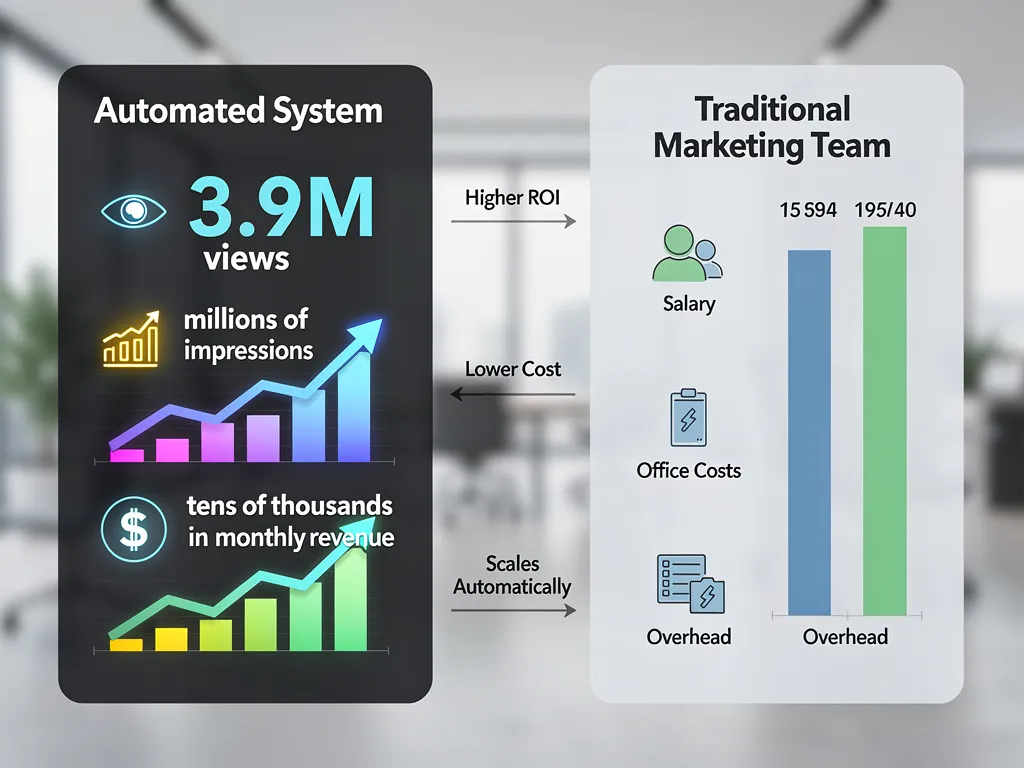
One creator built four AI agents over six months and documented the results: 3.9 million views on a single post, millions of impressions monthly, and tens of thousands in monthly revenue—all from automating what normally requires a 5–7 person marketing team. The system ran 24/7 without vacation requests or performance reviews.
Another case: seven days of testing a refined ChatGPT prompt for content generation produced 340% more impressions, 12 viral posts, and 2,847 new followers. Same time investment as before, but the output multiplied because the prompt was treated as infrastructure, not a one-off experiment.
The Impression Multipliers
A marketer working with portfolio companies implemented a process where daily meeting transcripts get fed into a fine-tuned AI model that converts them to social content. Result: 10 million social impressions per year from a single person managing the system.
Another team documented 25 million impressions and 50,000+ leads generated using a stacked AI approach: viral content engines, automated LinkedIn engagement, AI-generated ad creatives, and UGC video factories. The system saved $247 per video compared to hiring creators.
The Revenue Plays
One creator set up what he calls “the laziest system ever”: create a niche profile, repurpose influencer content with AI, auto-schedule 10 posts per day, build a DM funnel to AI-generated ebooks, and watch $10,000 monthly profit roll in from ~20 customers at $500 each. He documented seven figures in profit over a year using this approach.
The most aggressive example: fully automated, AI-driven content business generating $203,871 monthly. The formula: proven niches only, 2 auto-published posts per day, viral formats cloned with AI, every post shoppable. The creator described it as “running Facebook ads in 2009”—early, obvious, almost unfair.
The Actual Workflow: What’s Really Happening Behind These Numbers
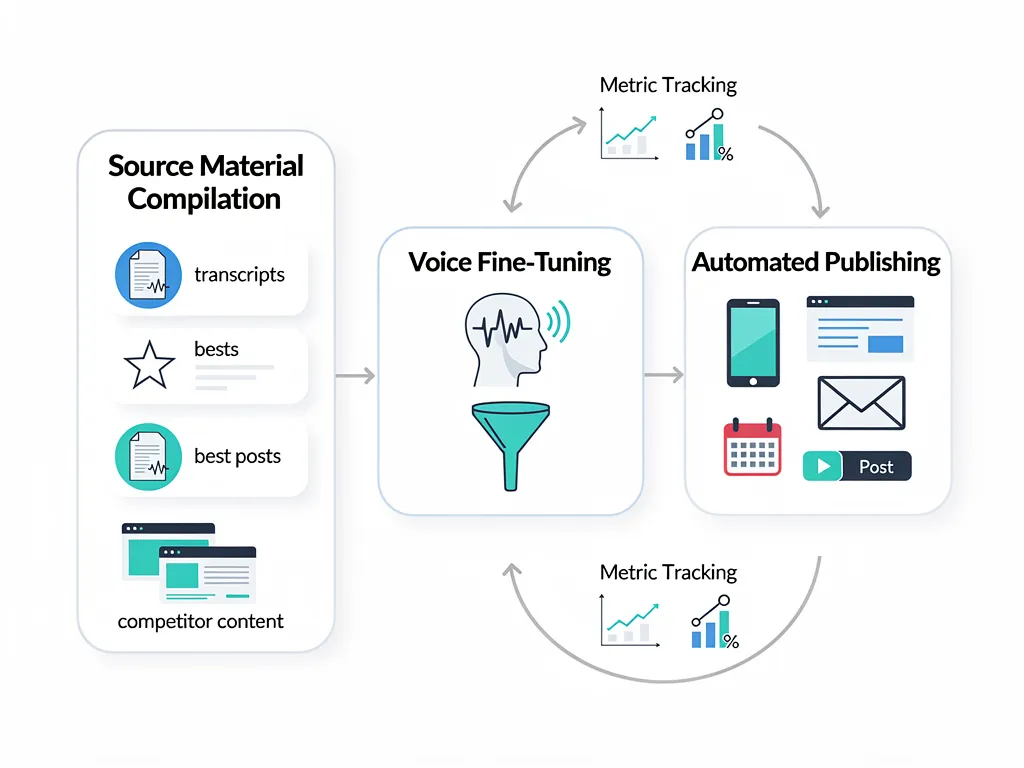
Here’s what separates the people making money from those getting mediocre results:
Step 1: Feed AI Quality Source Material
You don’t just tell AI to “write viral social posts.” That produces slop.
The winning creators compile: transcripts from their meetings, their own best-performing posts from the past year, competitor’s viral content in their niche, influencer posts they respect, industry news, customer conversations. This becomes the training material.
One creator emphasized this explicitly: “Remember to feed AI with good content before so you won’t get slop.” It sounds obvious, but most people skip this step.
Step 2: Fine-Tune or Prompt-Engineer for Your Voice
Generic AI outputs look generic. The creators getting results either fine-tune models on their own content or develop prompts so specific they lock in brand voice, tone, and format preferences.
A 21-year-old did this by feeding transcripts into a fine-tuned model. The result: content that sounded like his boss, not like ChatGPT. Another creator built “AI agents” for specific tasks: one for viral content, one for ad creatives, one for SEO content, one for newsletter-style pieces. Each agent was tuned to a specific output format.
Step 3: Automate Publishing and Track Obsessively
Once the content is generated, schedule it. Most successful cases publish 2–10 posts per day across platforms. Some use multi-platform content engines that adapt a single piece for Instagram, TikTok, LinkedIn, and Twitter simultaneously.
Then—and this matters—track every metric. Views, engagement rate, clicks, conversions. The 21-year-old marketer “tracks each metric obsessively.” The $203,000/month creator watches which formats convert. The seven-figure creator monitors checkout views and buyer behavior.
The data feeds back into the system. What worked last week gets amplified. What flopped gets retired. This is how 340% improvement happens in seven days.
The Platform-Specific Approaches
LinkedIn: Follower Multiplication
LinkedIn has become the easiest platform for AI-driven growth because the algorithm rewards consistency and the audience is professional enough to engage with well-written posts.
One documented case: 40,000 followers using what was called an “LinkedIn Empire Blueprint”—a system that combines AI content generation with automated engagement (likes, comments, DMs). Paired with fine-tuned content agents that maintain brand voice, this approach generated 80,000 followers and 50,000+ leads across the entire stack.
TikTok and Instagram: Viral Format Cloning
Short-form video platforms reward format repetition. AI agents now generate video scripts, hooks, and editing instructions based on viral formats. One creator built an “AI UGC Factory” that produces five-minute videos in roughly 30 minutes—saving $247 per video compared to hiring creators.
The approach: study top creators in your niche, identify their format patterns, feed those patterns into an AI agent with your product or message, generate dozens of variations, publish the best ones.
Email and Direct Messages: Funnel Automation
Social media generates the attention. Email and DMs convert it.
Multiple creators documented AI-powered email sequences with 67%+ open rates and 18%+ conversion sequences. One built a “DM funnel” where AI generates ebooks (five complete ebooks in 30 minutes) and sends them via DM, leading to product sales. Another created “pre-nurture flows” that qualify leads before they ever talk to a salesperson.
The Competitive Advantage: Why This Matters Now
The gap between casual AI users and systematic builders is enormous right now.
A casual user might ask ChatGPT for a post idea, get something generic, spend 20 minutes editing it, post once a week, and see mediocre engagement.
A systematic builder sets up infrastructure: fine-tuned models, multi-agent systems, automated publishing, metric tracking. They publish 10 times per day. They’re not competing on effort; they’re competing on volume and consistency. By the time the casual user posts once, the builder has generated, tested, and published enough content to find what works.
One creator put it directly: “The businesses adopting AI marketing agents like these will have an insurmountable advantage while everyone else is still hiring expensive teams and dealing with human limitations.”
This isn’t hyperbole based on the documented results. A $250,000 marketing team was replaced. A single person is generating 10 million impressions annually. Someone is pulling $200,000+ monthly from fully automated content.
The Real Constraints (And Why They Matter)
None of this works if you skip the fundamentals.
Quality source material is non-negotiable. You can’t feed AI garbage and expect gold. The creators getting results spend time upfront compiling their best content, competitor research, and niche knowledge. This becomes the foundation.
Consistency beats perfection. Publishing 10 mediocre posts per day outperforms publishing one perfect post per week. The data proves this. More volume means more opportunities to hit the algorithm, more data to learn from, more chances for something to go viral.
You need a funnel, not just traffic. Millions of impressions mean nothing without a way to convert them. The successful cases all had something downstream: a product, a course, an email list, a DM funnel, affiliate links. The AI generates the attention. The funnel captures the value.
Tracking is the difference between luck and system. The 21-year-old “tracks each metric obsessively.” The $203,000/month creator watches which formats convert. Without data, you’re just publishing into the void. With data, you’re running a business.
How to Start: The Practical Path
If You’re Starting From Zero
Pick a niche. Study 20 top creators in that space for one week. Save their best posts. Note the formats, hooks, and topics that get engagement.
Compile your own best material if you have it. If not, start with the competitor research.
Write a detailed prompt or fine-tune a model on this material. The prompt should specify: tone, format, length, target audience, topics to avoid. Be specific. Generic prompts produce generic content.
Generate 20 posts. Publish 5 this week. Track engagement. See what lands. Adjust the prompt based on data.
Next week, publish 10. Then 20. Build the habit of consistent publishing before you automate it.
If You Already Have an Audience
Export your best 50 posts from the past year. Feed them into a fine-tuning process or use them as examples in a detailed prompt.
Generate 50 new posts based on your style. Publish 5–10 per week. Your existing audience will recognize your voice; they’ll engage.
Watch the metrics. Double down on what works. Retire what doesn’t.
Once you have a month of data showing improvement, consider building out a multi-agent system: one agent for viral hooks, one for educational content, one for product promotion, one for community engagement. Each tuned to a specific purpose.
If You Want to Monetize
You need a funnel. Options:
- Direct product sales: Social media drives traffic to a product page. Email sequences and DM funnels convert.
- Affiliate commissions: Share products you use, include affiliate links, let the algorithm do the work.
- Digital products: AI can help create ebooks, templates, courses. Sell them via DM funnel or email sequence.
- Services: Build credibility with social content, convert followers into consulting or done-for-you clients.
- Ad revenue: Some platforms (YouTube, Medium, Substack) pay based on traffic. High volume of posts can generate meaningful revenue.
Pick one. Build the funnel. Let AI handle the content generation while you optimize conversion.
Tools and Approaches: What Actually Works
The creators documenting results used various approaches:
Fine-tuned language models: Taking a base model and training it on your content. This produces the most on-brand results but requires some technical setup.
Advanced prompting with mainstream AI: Using ChatGPT, Claude, or similar with extremely detailed prompts. Simpler to set up, requires more iteration to dial in the voice.
Multi-agent systems: Building separate AI agents for different tasks (content creation, ad generation, email sequences, engagement). More complex but allows specialization.
Automation platforms: Services that connect AI to publishing, email, and CRM platforms. Handle the scheduling and distribution automatically.
The common thread: none of these tools work without the workflow. The tool is maybe 20% of the equation. The other 80% is source material, prompt engineering, publishing consistency, and metric tracking.
Why This Is Different From Previous Content Automation Attempts
Content automation has been promised for years. Why is it actually working now?
Previous tools generated obvious AI content. People could smell it. Engagement was terrible. It felt like spam.
Modern language models are better at capturing nuance, voice, and context. But more importantly, the successful creators aren’t using AI to replace thinking. They’re using it to scale execution.
They still decide the niche, study the audience, compile source material, define the voice, analyze the data, and optimize the funnel. AI handles the generation and publishing. The human handles the strategy.
This division of labor is what makes it work. AI isn’t replacing marketers. It’s replacing the repetitive, low-leverage parts of marketing so marketers can focus on strategy.
The Sustainability Question
Will platforms eventually saturate? Will everyone be doing this?
Probably. But the people who start now will have a years-long head start. They’ll have audiences, data, systems, and credibility. New entrants will be competing against established creators with algorithmic advantage.
Plus, the technology keeps improving. As AI gets better, the competitive bar rises. But the people who built systems early will be able to upgrade their systems. People starting from scratch will always be behind.
The window is open now. It won’t stay open forever.
The Missing Piece: Consistency and Tracking
Here’s what separates the documented success stories from the failures: they treat AI as infrastructure, not a novelty.
Infrastructure means: it runs reliably, it’s monitored, it gets optimized based on data, it compounds over time.
The 21-year-old tracks metrics obsessively. The $203,000/month creator publishes 2 posts daily and measures every conversion. The seven-figure creator monitors buyer behavior and adjusts the funnel.
This is boring work. It’s not creative. But it’s where the money is.
Most people want to generate content. They don’t want to track impressions, conversion rates, and cost per acquisition. The people making real money do both.
How to Stay Ahead: Building Your System
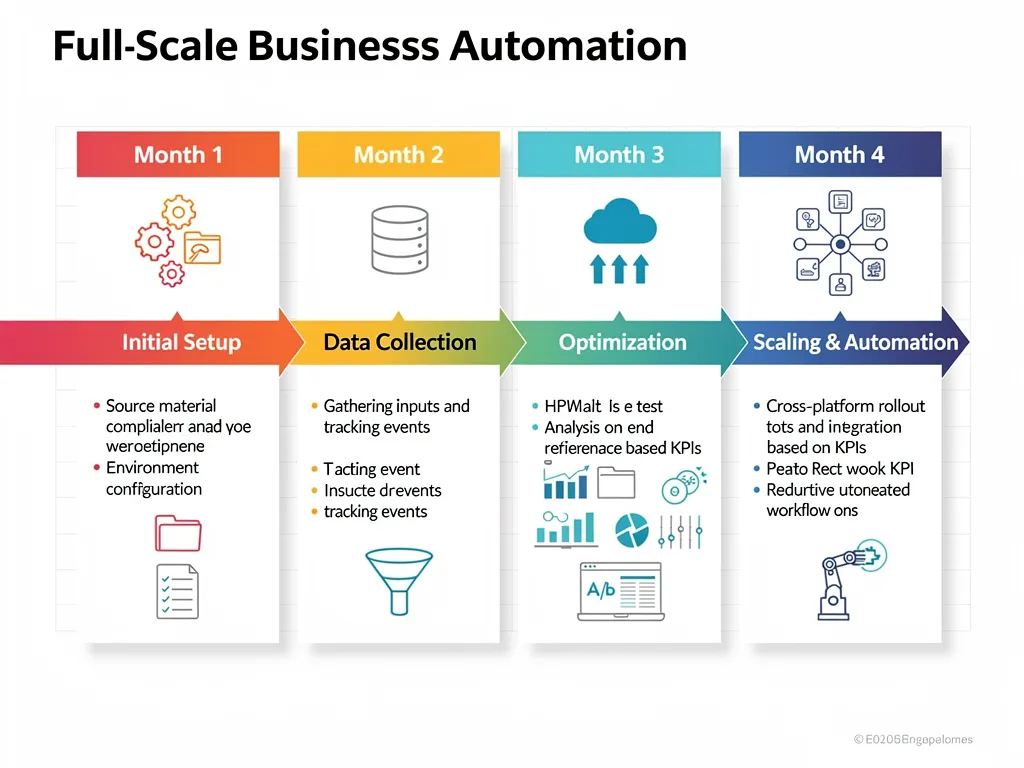
If you’re serious about using AI for social media posts, here’s the meta-approach:
Month 1: Research and setup. Study your niche. Compile source material. Set up your publishing schedule. Get comfortable with one tool (ChatGPT, Claude, a fine-tuning service, whatever). Generate 50 posts. Publish 5–10.
Month 2: Data collection. Publish 50+ posts. Track everything: views, engagement, shares, clicks. Identify patterns. What topics, formats, and times perform best?
Month 3: Optimization. Double down on what works. Retire what doesn’t. Refine your prompts or model based on data. Start building a funnel (email list, DM sequences, product page, whatever).
Month 4+: Scale. Increase publishing frequency. Add new platforms or content types. Optimize the funnel. Build automation so the system runs with minimal daily input.
By month 6, you should have enough data and optimization to see real results. By month 12, you should have a system that generates consistent impressions and revenue with a few hours of weekly input.
This is exactly what the documented cases did. The timeline varies (some compressed it to weeks, others took months), but the process is consistent.
FAQ: Common Questions About AI for Social Media Posts
Won’t everyone know it’s AI-generated?
Not if it’s good. The key is feeding AI quality source material and fine-tuning the output to match your voice. Content that’s generic or obviously templated will look AI-made. Content that’s specific, opinionated, and well-written won’t.
How much time does this actually take?
Setup takes 20–40 hours. Once it’s running, maintenance is 5–10 hours per week: generating content, publishing, analyzing data, optimizing. Compare that to hiring someone to write social posts (40+ hours per week) or doing it yourself manually (10–20 hours per week).
What’s the best platform to start with?
LinkedIn is easiest for follower growth and credibility. TikTok and Instagram are best for viral potential. Twitter is best for reach and engagement. Start where your audience is, or start where the algorithm is most forgiving (usually LinkedIn or Twitter).
Do I need to be a technical person to do this?
No. You can start with ChatGPT and a spreadsheet. As you scale, you might integrate automation tools or fine-tuning services, but the basics don’t require coding.
How much does this cost?
If you use ChatGPT Plus ($20/month) and free publishing tools, you’re looking at $20–50/month. If you use more advanced tools or services, it could be $100–500/month. Compare that to hiring someone ($3,000–10,000/month) and the ROI is obvious.
What if I don’t have a product to sell?
Build an audience first. Monetization comes later. Options: affiliate commissions, sponsorships, digital products, consulting, ads. You don’t need a product on day one.
The Real Opportunity Here
The documented results are real. A creator making $203,000 monthly from automated posts. Another pulling in seven figures. A third generating 10 million impressions from a single person managing the system.
These aren’t anomalies. They’re the logical outcome of applying AI infrastructure to a repeatable process.
The constraint right now isn’t technology. It’s execution. Most people know AI can generate social posts. Very few are actually building systems that run 24/7, tracking data obsessively, and optimizing based on results.
If you do those things—if you treat AI as infrastructure instead of a toy—you have an advantage that compounds.
In a few years, this will be table stakes. Everyone will be using AI for social media posts. But right now, the window is open. The people who build systems now will be ahead of everyone else.
Next Steps: Building Your First System
Start small. Pick one niche. Compile 20 examples of great content in that space. Write a detailed prompt or fine-tune a model on your own best content.
Generate 20 posts this week. Publish 5. Track engagement. Adjust based on data.
Next week, publish 10. Build the habit. Once you have a month of data, automate the publishing and scale to 20+ posts per week.
That’s the whole system. It’s not complicated. But it requires consistency, data discipline, and the willingness to treat AI as infrastructure, not a novelty.
If you’re serious about scaling social media presence without hiring a team, this is the approach that’s actually working.
One note: if you’re managing multiple social profiles or trying to maintain consistent, keyword-backed content across platforms while tracking performance, consider a platform like teamgrain.com. It automates content distribution across 12+ social networks, handles scheduling, and provides analytics so you can see what’s actually driving impressions and engagement. The goal is to spend less time managing platforms and more time optimizing based on data.
The creators making real money aren’t spending hours on scheduling and analytics. They’ve automated that part so they can focus on strategy and optimization. That’s the actual leverage.
The Competitive Reality
Here’s what’s happening right now: the people building AI systems for social media are gaining an insurmountable advantage over everyone else.
They’re publishing 10x more content. They’re testing faster. They’re learning from data. They’re optimizing ruthlessly.
By the time someone decides to start, they’re already six months behind. By the time a traditional marketing team is hired, the AI builder has generated millions of impressions and built an audience.
The window won’t stay open forever. In a few years, this will be normal. But right now, it’s an advantage.
The question is: are you going to build the system, or wait until everyone else does?