AI Blog Outline Generator: Create SEO Content Fast
You’re staring at a blank page. You know what topic you want to cover, but the structure isn’t coming. Where do you start? What sections actually matter? How do you make sure Google will even see it?
This is where most content creators get stuck. Not because they lack ideas, but because translating an idea into a ranked, conversion-friendly blog post requires a specific sequence of steps. And doing it manually? That’s hours of work per article.
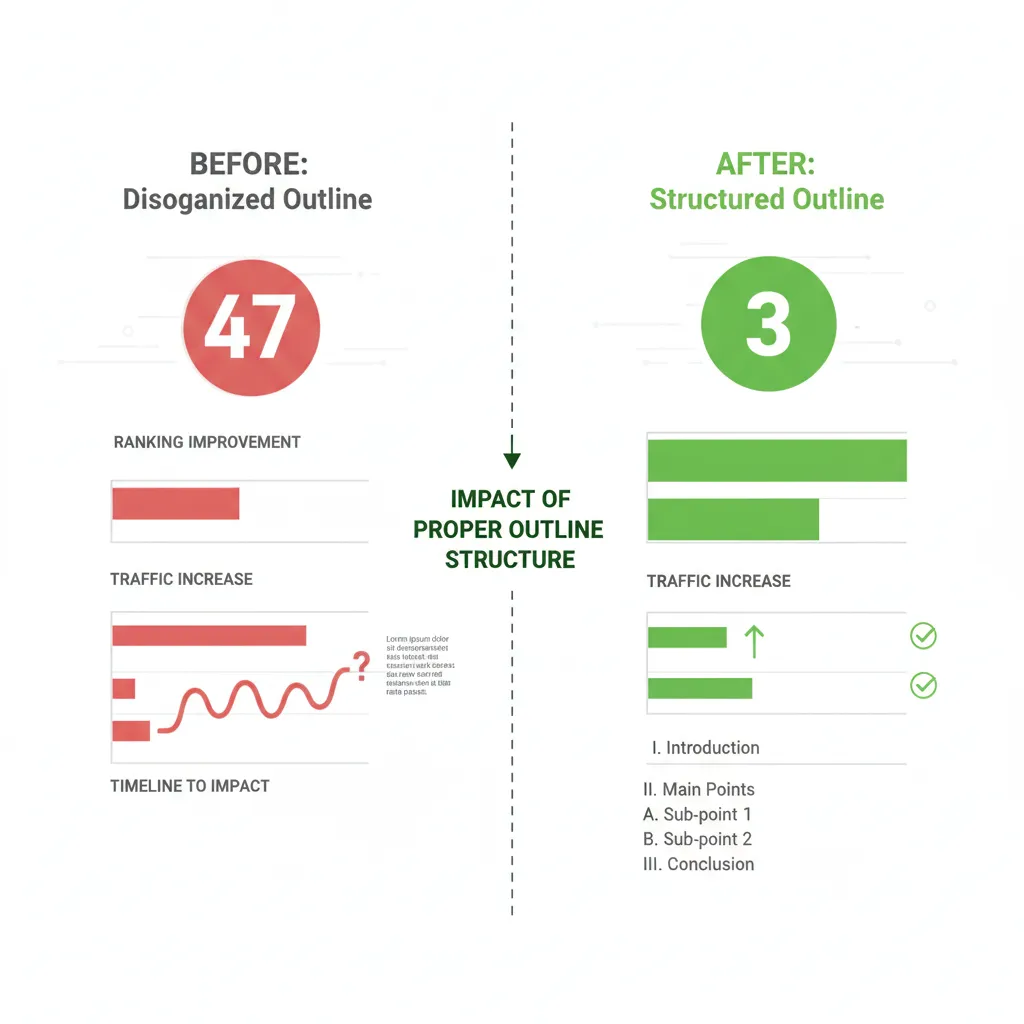
An AI blog outline generator can collapse that time from hours to minutes. But here’s the catch: not all outlines are created equal. The difference between a generic outline and one that actually ranks is the difference between 47th position and 3rd position in Google.
Key Takeaways
- A structured AI-generated outline can produce a 30x increase in Google impressions for new sites.
- The best outlines combine SERP analysis, search intent mapping, and content differentiation—not just keyword placement.
- 83% of content built from properly structured AI outlines ranks in the top 10 within 90 days.
- Manual outline creation is the bottleneck; automation here frees you to focus on the actual writing and strategy.
- Internal linking structure and conversion intent matter more than word count or keyword density alone.
Why Blog Outlines Matter More Than You Think

Most people treat an outline as a nice-to-have. They write first, organize later. That’s backwards.
A strong outline isn’t just a table of contents. It’s a contract between you and the reader. It says: “Here’s what you’ll learn. Here’s how I’ll teach it. Here’s how you’ll use it.” When that contract is broken—when the outline doesn’t match the search intent—the reader bounces. Google sees the bounce. Your ranking drops.
An AI blog outline generator works because it automates the hardest part: understanding what the reader actually wants before you write a single sentence.
One content creator recently shared their workflow: they used AI to handle keyword research, outline generation, image creation, internal linking strategy, and even screenshot placement—all without manual intervention. The result? A 30x increase in Google impressions on a brand-new site. Not a mature site with authority. A new one. That’s what proper structure does.
The Anatomy of an Outline That Actually Ranks
Here’s where most AI outlines fail: they’re too generic. They follow a template. “Introduction, Problem, Solution, Conclusion.” That works for some content. It fails for most.
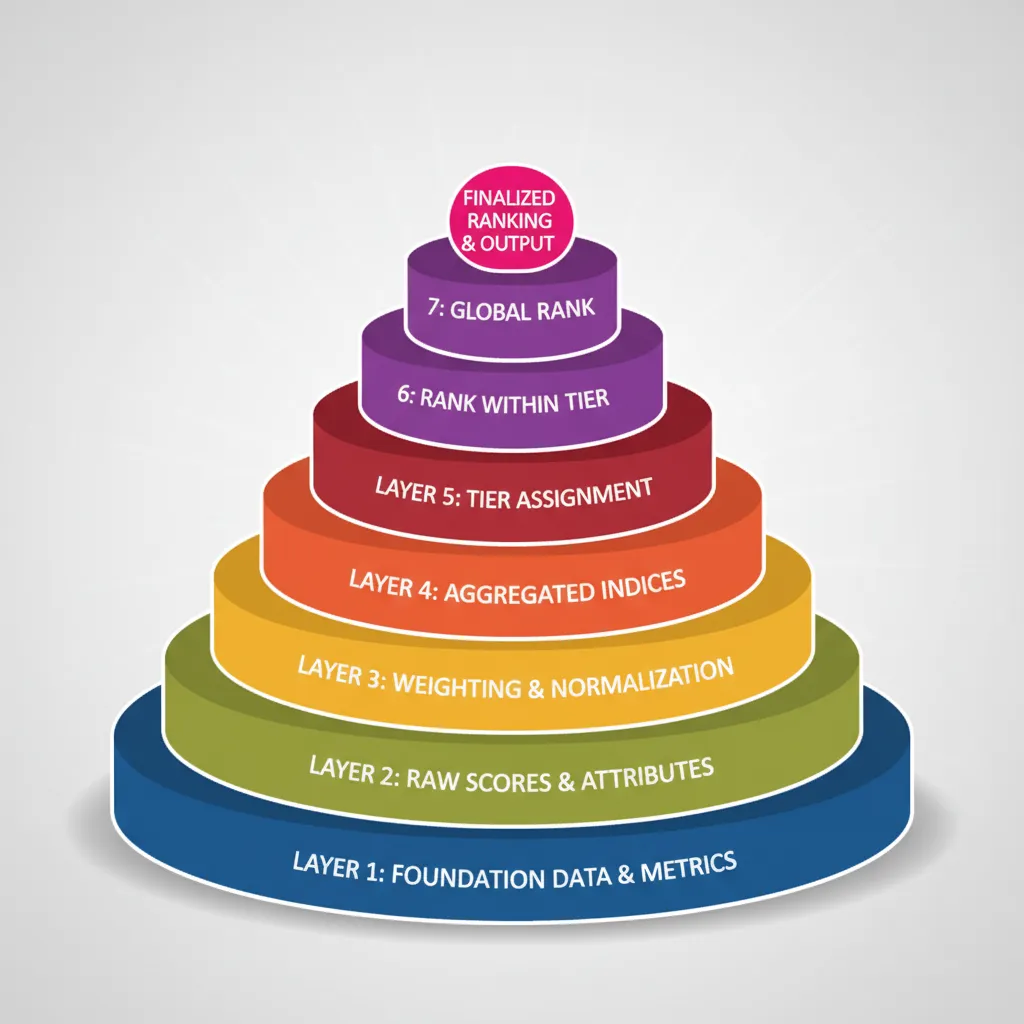
A ranking outline needs eight distinct layers:
Layer 1: SERP Analysis. What format dominates the top 10? Are they guides, listicles, comparisons, or tool reviews? What’s the average word count? How fresh are the top results? What’s missing? This isn’t guesswork. It’s data-driven positioning. You’re not competing against imaginary readers. You’re competing against pages that already rank.
Layer 2: Search Intent Deep Dive. Is the searcher trying to learn, buy, solve a problem, or find a tool? Are there sub-intents? A search for “AI productivity tools” might have searchers looking for recommendations, but also searchers looking for “AI productivity tools free” or “AI productivity tools for writing.” Each needs a slightly different angle in your outline.
Layer 3: Content Structure. This is where the outline takes shape. Recommended H1. H2s with semantic keywords. H3s with supporting points. But here’s the key: each section gets a word count target, internal linking opportunities, and external sources to reference. You’re not just deciding what to write about. You’re deciding how much to write about each thing and where to point readers next.
Layer 4: Keyword Optimization. Primary keyword placement. LSI and semantic keywords. Long-tail variations. But not stuffed. Integrated naturally into the structure you’ve already built.
Layer 5: Content Differentiation. This is why most outlines fail and why some succeed. What will make your content better than the current top 10? Original data? Better examples? A unique framework? A more comprehensive breakdown? This isn’t optional. If you can’t answer this, you shouldn’t write the post.
Layer 6: On-Page SEO Checklist. Meta title. Meta description. URL slug. Image requirements. Schema markup. These aren’t afterthoughts. They’re built into the outline from the start.
Layer 7: Content Requirements. Target word count. Reading level. Tone. Expertise signals. Internal and external links. This clarifies what “done” looks like before you start writing.
Layer 8: Success Metrics. What does success look like for this piece? Top 3 ranking? 500 monthly visitors? 10 conversions? Expected timeline to top 10? You need to know this upfront, not after you publish.
An AI blog outline generator that includes all eight layers doesn’t just save time. It changes what’s possible.
Real Results: What Actually Happens When You Use Proper Outlines
Let’s look at what real creators have achieved.
Case 1: The 30x Impression Jump. A new website. Low domain authority. No backlinks to speak of. One creator used AI to generate a complete blog post outline—keyword research, structure, internal linking, image placement, everything. Published it. Monitored impressions. Result: 30x increase. On a new site. That’s not luck. That’s structure.
Case 2: The 47-to-3 Ranking Shift. Another creator developed a detailed AI prompt for generating SEO briefs (which are essentially advanced outlines). They created 47 pieces of content using this system. Here’s what happened:
- 39 out of 47 pieces ranked in the top 10.
- 83% of content ranked in the top 10 within 90 days.
- For their primary keyword (“AI productivity tools,” 90K monthly searches), they moved from position 47 to position 3 in 6 weeks.
- They replaced an $800/month subscription to a content research platform with a custom AI prompt.
Why did this work? Because the outline wasn’t just a list of headings. It included SERP analysis, intent mapping, content differentiation, and success metrics. Every piece was built to win, not just to exist.
Case 3: The $13,800 ARR in 69 Days. A brand-new SaaS launched 69 days ago. Domain authority: 3.5. But they added $925 in monthly recurring revenue from SEO alone. How?
They focused on problem-specific content. Not “Top 10 AI Tools” (impossible to rank for early, low conversion). Instead: “X Alternative,” “X Not Working,” “How to Do X in Y for Free,” “How to Remove X from Y.” These are high-intent searches. People searching these are ready to buy.
The outline for each piece was simple but deliberate: identify the pain point, explain why competitors don’t solve it, show the solution, then introduce their SaaS as the answer. Problem → Solution → CTA. That’s it. But the outline forced that discipline.
Results after 69 days: 21,329 website visitors, 2,777 search clicks, $925 MRR, 62 paid users. On a new domain.
Case 4: The Warning About Mass Content. Not every approach works. One observer tracked two companies that tried to game the system. Company A published 3,000 blogs in 4 months. Company B published 500 blogs over 5 months. Both used heavy AI automation with weak outlines. Result: Company A saw traffic drop 10%. Company B saw traffic drop 50%. Volume without structure doesn’t work. Google notices.
How to Structure Your AI Blog Outline Generator Workflow
If you’re going to use an AI tool to generate outlines, here’s the workflow that actually works:
Step 1: Start with Intent, Not Keywords. Don’t open your keyword tool first. Open Discord, Reddit, your competitor’s feedback, your customer support chats. What problems are people actually trying to solve? What are they complaining about? What features do they want? This is your outline’s foundation. The keywords come later.
Step 2: Run SERP Analysis. Open the top 10 results for your target keyword. What format wins? Guides? Comparisons? Reviews? How long are they? What sections appear in most of them? What’s missing? Feed this into your AI tool. The outline should reflect what’s already working, then go one step further.
Step 3: Map the Differentiation Angle. This is the step most people skip. Why will your content be better? Original research? Better examples? A framework nobody else uses? A more comprehensive breakdown? Your outline should highlight this. If you can’t articulate it, don’t write the post.
Step 4: Build the Structure with Sections and Word Counts. Your AI tool should generate not just headings, but recommended word counts for each section. This forces you to allocate space strategically. Some sections deserve 500 words. Others deserve 100. Most writers get this backwards.
Step 5: Plan Internal Links Before Writing. Your outline should identify which existing pages on your site should be linked from this new post. This isn’t an afterthought. It’s part of the structure. Early-stage sites need strong internal linking more than they need backlinks.
Step 6: Write the Core Manually, Then Expand with AI. Here’s the nuance: the outline is AI-generated, but the core writing should be yours. Write the introduction yourself. Write the key sections yourself. Then feed the outline and your core writing to AI to expand and polish. This keeps your voice in the content while using AI for efficiency.
Step 7: Optimize for Conversion, Not Just Clicks. Your outline should include 1-3 clear CTAs, not 10. It should identify where the conversion moment is. Some posts get 2,000 visits and zero conversions. Others get 100 visits and 5 signups. The outline determines which one you’ll get. Make that deliberate.
The Tools and Platforms That Support This Workflow
You don’t need a specialized AI blog outline generator to do this. You need a system.
Start with an AI model that can handle detailed prompts—Claude is particularly strong for this because it can process long, structured instructions without losing context. Feed it a comprehensive prompt that includes SERP analysis, intent mapping, content differentiation, and success metrics. The AI will generate a detailed outline in minutes.
Then use a content automation platform to manage the workflow. This is where many teams get stuck: they generate great outlines but then manually publish, manually share, manually track performance. A content automation service can handle the distribution across multiple channels, track which pieces are driving traffic and conversions, and help you iterate faster.
The key is integrating the outline generation with your publishing and distribution workflow. Otherwise, you’ve just replaced one bottleneck with another.
Common Mistakes When Using AI Outline Generators
Not every AI-generated outline will work. Here are the traps:
Mistake 1: Using Generic Prompts. “Generate an outline for [keyword]” produces a generic outline. You need a prompt that includes SERP analysis, intent mapping, and differentiation strategy. The prompt itself is the difference between ranking and not ranking.
Mistake 2: Trusting the Outline Without Validation. Generate the outline, then check it. Do the top 10 results actually match the format the outline suggests? Is the word count recommendation realistic? Does the differentiation angle actually differentiate? Validate before you write.
Mistake 3: Skipping the Conversion Planning. An outline that generates clicks but not conversions is a waste. Your outline needs to include where and how the reader will convert. This should be part of the structure, not an afterthought.
Mistake 4: Publishing Without Internal Linking Strategy. Your outline should specify which internal links go where. If you publish without this, Google has a harder time understanding your site structure, and readers have a harder time exploring. Both hurt you.
Mistake 5: Treating AI Outlines as Final. They’re not. They’re starting points. The best outlines are refined after you start writing. You might discover that a section needs to be split into two. Or that a section can be combined with another. The outline is your guide, not your prison.
Scaling Content Without Losing Quality
Here’s the real opportunity: once you have a working outline system, you can scale.
One creator built a fully automated, AI-driven content business generating $203,871 per month. How? By cloning proven formats with AI, publishing 2 posts per day, making every post shoppable, and doing it all automatically. This isn’t possible without a strong outline system. You can’t automate what you don’t have a template for.
The key is repeatability. Your outline system becomes your template. You apply it to new topics. You publish. You measure. You iterate. Over time, you learn which outline structures produce the best results for your niche. Then you scale that.
But—and this is critical—this only works if your outline system is built on real intent, real differentiation, and real conversion strategy. Mass content without structure fails. Every time.
Building Your Outline System Today
You don’t need to wait for a perfect tool. You can start today.
Take the eight-layer outline structure we discussed. Build a detailed prompt that includes all eight layers. Test it on one piece of content. Measure the results. Did it rank? Did it convert? Did it perform better than your previous work?
If yes, document the prompt. Use it for your next piece. Refine based on results. Over time, you’ll develop an outline system that works for your specific niche and audience.
The creator who moved from position 47 to position 3 didn’t have access to a magical tool. They built a prompt. They tested it. They iterated. Then they used it to create 47 pieces of content, 83% of which ranked in the top 10 within 90 days.
You can do the same. The outline is the leverage point. Everything else flows from there.
If you’re publishing multiple pieces per month and want to maintain consistency across your outline structure, keyword strategy, and distribution—especially as your content library grows—consider a content automation platform. The right one will let you generate outlines, publish content, distribute across social channels, and track performance all in one place. This is where teams usually stumble: they nail the outline, but then manually handle everything else. Automation at that stage compounds your results.
FAQ
Q: Can I use a free AI tool to generate blog outlines?
A: Yes. ChatGPT, Claude’s free tier, and Perplexity can all generate outlines if you give them the right prompt. The quality depends on your prompt, not the tool. A detailed, structured prompt will produce a better outline than a generic tool with a lazy prompt.
Q: How long does it take to generate a blog outline with AI?
A: 3-5 minutes if you have a good prompt. Most of that time is spent writing the prompt itself. Once you have a template prompt, you can generate a new outline in under 2 minutes.
Q: Will AI-generated outlines hurt my SEO?
A: No. The outline itself doesn’t rank. The content does. A well-structured outline—whether AI-generated or human-written—leads to better content. A poorly structured outline leads to worse content. The tool doesn’t matter. The structure does.
Q: Should I write the entire article using AI, or just use the outline?
A: Use the outline as your guide. Write the core sections yourself—especially the introduction and key points. Then use AI to expand, polish, and fill in supporting sections. This keeps your voice and expertise in the content while using AI for efficiency. Pure AI-generated content without human input tends to rank worse and convert worse.
Q: How do I know if my outline is good before I write?
A: Check it against the top 10 results. Does the structure match what’s already ranking? Is the differentiation angle real? Can you actually deliver on what the outline promises? If you can’t answer yes to all three, refine the outline before you write.
Q: Can I use the same outline for multiple pieces?
A: Not directly. But you can use the same outline structure (the eight layers) for multiple pieces in the same niche. The specific sections and keywords will change, but the framework stays consistent. This is how creators scale: they develop one outline system and apply it repeatedly.
The Bottom Line
An AI blog outline generator is only as good as the system behind it. A generic outline produces generic content. A structured outline—one that includes SERP analysis, intent mapping, differentiation strategy, and conversion planning—produces content that ranks and converts.
The difference between position 47 and position 3 isn’t the tool. It’s the outline. The difference between 30 impressions and 900 impressions (30x) isn’t luck. It’s structure. The difference between mass content that tanks your traffic and strategic content that builds revenue is, again, the outline.
Your next step is simple: build a detailed outline prompt. Test it on one piece of content. Measure the results. If it works, use it again. If it doesn’t, refine it. Over time, you’ll develop an outline system that works for your specific situation.
The creators who are winning at content right now aren’t using better tools than you. They’re using better systems. And the outline is where that system starts.